Place the metal lid tightly over the water soaked formerly combustible rags. Dispose as a municipal waste.
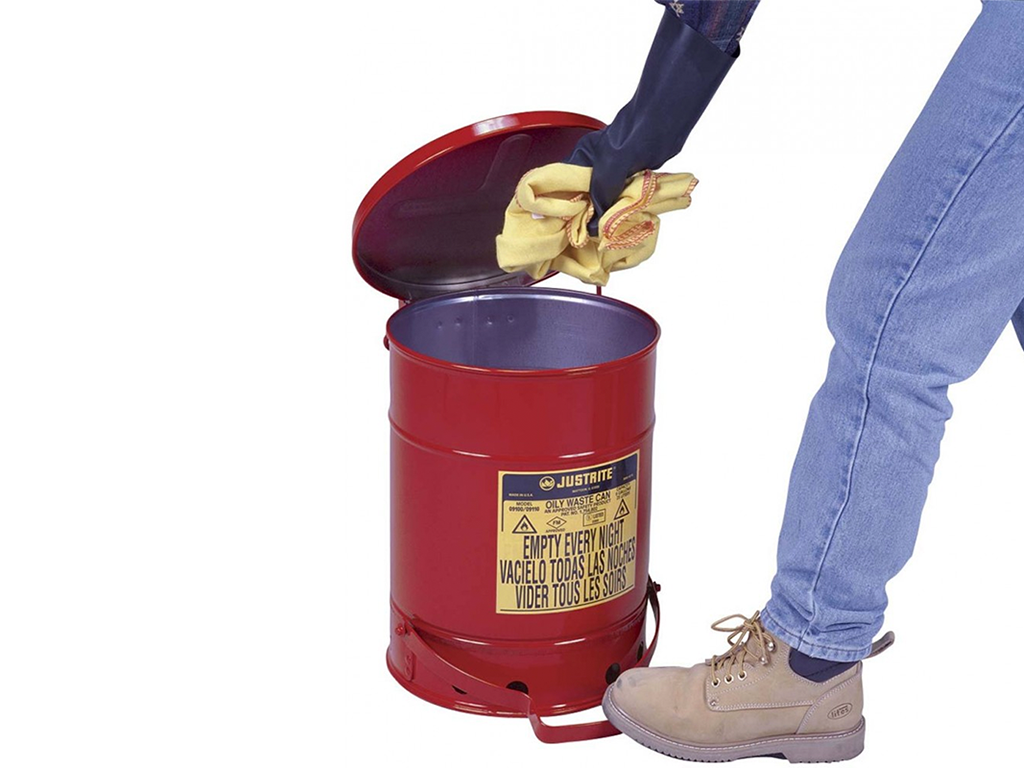
Safe Disposal Of Oily Or Flammable Rags Mendham Fire Department
Make sure no free liquid is present.
. It was right about this time last year I saw a story in the news where a family was doing some remodeling work on their home when a fire broke out and destroyed their home due to the improper disposal of oily rags. These containers allow air to flow around the rags thus dissipating the heat. Once dry and hardened the rags are safe to throw in the trash.
They must be exposed to air on both sides so they can dry out safely. These containers allow air to flow around the rags thus dissipating the heat. Stored in a container designed for the purpose.
Taken outdoors and thrown into a dumpster. To properly dispose of oily rags they must be. Your responsibilities when it comes to disposal of oil soaked rags.
Oily rags can quickly become combustible when they are discarded in trash cans or dumpsters. Burned at the end of the shift. If you are working with others have everyone immerse their rags in a pail of water then take them out at the end of the day and hang them individually to dry or hire a specialized company to dispose of them.
Couldnt find anything by googling it. Please take this warning note seriously. Welcome to Yeah We Do Thats tip of the weekThis is a topic I have touched on before but is such a serious safety concern I thought it was time to revisit it.
I do my own car repairs and just curious of where I should be disposing of oily paper towels or rags I have after cleaning up sometimes. Rags towels and absorbents contaminated with oil and grease are not considered hazardous waste unless they are contaminated with a listed solvent see Table 1 below. Solvent-soaked rags are not a spontaneous combustion hazard but may be a fire hazard since many solvents are flammable.
If material is non-hazardous oily spills store in leak-proof container. If small quantities of oily shop towels or absorbents are generated then these can be discarded in the municipal trash. Just shows where to take fluids and such.
If the oily rags ignite inside the trash receptacle nearby materials such as other trash will catch fire creating a larger hazard for responding firefighters and building occupants. Once theyre dry there is no further spontaneous combustion hazard. If your line of business means that you are left with lots of oily rags disposing of.
In this article I will discuss how to dispose of oily rags OSHA. The waste cans should not have plastic liners and they should be emptied daily. Lay them individually to air dry then dispose of them with your regular trash.
Protective guards are provided on power tools and machines in order to keep _____. The waste cans should not have plastic liners and they should be emptied daily. Solvent-soaked rags are not a spontaneous combustion hazard but may be a fire hazard since many solvents are flammable.
Ensuring safe onsite storage of all hazardous wastes. To dispose of rags properly that have flammable material on them really comes down to two options. I have to admit while I helped write our new safety quizzes using our library of expert texts as resources I typically dispose of my oily rags by hanging them over the edge of a trash can until they dry and then throw them in the trash.
Reusable and recycled rags provide workshops and garages with a more affordable means of cleaning up service fluids and water oil from floors and machinery. 1993 which is used to recover refrigerant from small appliances for the purpose of disposal must meet what standard. Fill the container with water until the rags are submerged.
To properly dispose of oily rags they must be _____. Special oily-waste cans should be used to store oil-soaked rags. Assuming the 55-gallon drum mentioned in your letter is equipped with a metal cover it would be suitable for daily disposal of combustible waste such as wipe rags.
Or you can soak them in water in a metal container and seal them with a tight lid and then store them until you can safely dispose of them at the hazardous waste facility. Special oily-waste cans should be used to store oil-soaked rags. Ask This Old House general contractor Tom Silva discusses the proper disposal techniques for oily rags to prevent spontaneous combustionSUBSCRIBE to This Ol.
You can either let them dry out flattened out not balled up or you can throw them in a designated container usually filled with water that is designed for these types of materials. Oily rags however are classed as hazardous waste and so must be disposed of according to the hazardous waste disposal guidelines. I know they can be a huge fire hazard so just wondering where they go.
Using a licenced disposal facility such as Commercial. Oily rags must carefully be hung or spread out flat to dry or they must be completely immersed in a water-filled bucket. Separate oily rags from other used rags that may be potentially ignitable contaminated with solvents etc.
If you let the press of work or an untimely phone call or visitor distract you from handling application rags as. Take the container to your local hazardous waste disposal. Washed thoroughly and returned to use.
Oily rags produced as part of commercial activity such as automotive industries industrial works etc must be disposed of in accordance with current legislation around hazardous wastes. Dispose of the linseed oil rags in one of the following ways. Keeping your work are clean and free of scraps or spills is referred to as.
29 CFR 1910106 allows daily disposal in such a container at or near the point where the waste is generated as contemplated by EPA requirements which you have summarized.

How To Dispose Of Engine Oily Rags Pdf Mcnally Institute

How To Dispose Of Oily Rags Osha Explained In 9 Steps 2022

How To Dispose Of Oily Rags Osha Explained In 9 Steps 2022


0 Comments